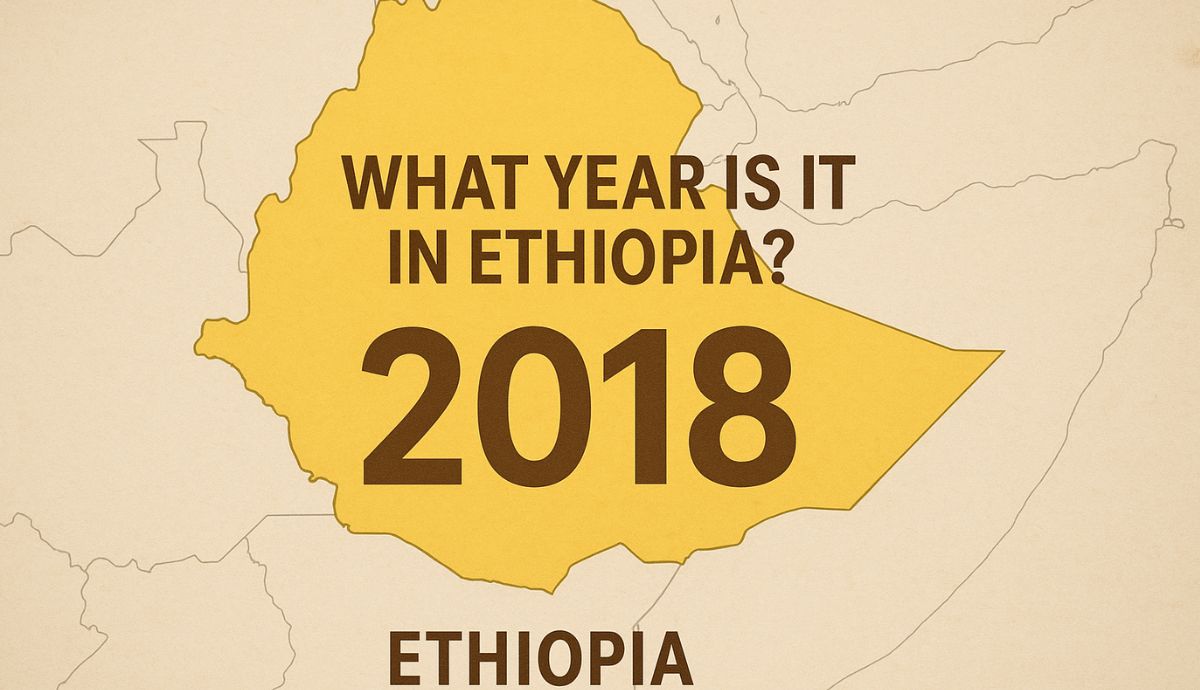
Have you previously believed about what year is it in Ethiopia? Ethiopia is one of the few countries that has not adopted the Gregorian calendar but has its own calendar system which is the Ethiopian calendar. It is not simply a calendar in Ethiopia but a calendar which is a reflection of the Ethiopian culture and religions.
While the rest of the world will be celebrating the 21st century in the year 2025, Ethiopia is in the year 2018. Yes, Ethiopia is about 7 to 8 years behind the rest of the world when it comes to the calendar system. This gap is mind bogglingly difference is what gets the attention from not only tourists but historians and scholars as well.
In Ethiopian culture, the calendar is one of the important elements. This can be seen in the way the calendar has been socially and culturally adopted in the modern life of Ethiopia. In this article, I will be focusing on the different aspects of culture as well as history of the calendar system.
The Predictive Calendar Model
The fulfillment of the question ‘what year is it in Ethiopia?’ often comes with the image of confusion, as many do not expect the answer to be this different from the rest of the world.
With the Gregorian calendar set to October 2025, the Ethiopian calendar will still remain in the year 2018. The Ethiopian New Year, also known as Enkutatash, is celebrated on the 11th day of September, which is September 12 during leap years.
Therefore, while the entire world moved to the year 2025, Ethiopians just a few weeks ago celebrated the year 2018. The difference in calendars is due to Ethiopia’s interpretation of the birth of Jesus Christ, allowing the country to stand out in the world
Origins of the Ethiopian Calendar
The Ethiopian calendar derives from the Coptic calendar, which has its roots in ancient Egypt. The calendar evolved in conjunction with early Christian traditions as well as the Alexandrian Church, which diverged from the Roman Church’s Christian birth dating.
The Gregorian calendar, formulated in 1582 by Pope Gregory XIII, is built on the assumption that Christ was born 2025 years ago (for the year 2025).
The Ethiopian calendar, on the other hand, believes that Christ was born seven to eight years later, hence the gap.
That gap, however, has never been solved. This is also the reason as to why Ethiopia is one of the few countries that still use a non-Gregorian calendar.
Structure of the Ethiopian Calendar
The Ethiopian calendar has 13 months:
12 months of 30 days each
1 additional month, Pagumē, which has 5 days (or 6 days in a leap year)
This design enables each month to closely correspond to the natural cycles of the year, making the calendar easy to use. Here’s how it works:
Ethiopian Month / Corresponding Gregorian Month
Meskerem September – October
Tikimt October – November
Hidar November – December
Tahsas December – January
Tir January – February
Yekatit February – March
Megabit March – April
Miyazia April – May
Ginbot May – June
Sene June – July
Hamle July – August
Nehase August – September
Pagumē September (5–6 days)
The Pagumē month of the calendar proves its mathematical and and time keeping sophistication.
How Many Years Behind is Ethiopia?
Ethiopia is 7 to 8 years behind the Gregorian calendar, because of the difference in the commencement of the Annunciation of Jesus Christ.
Summarily,
Gregorian calendar: Jesus’ birth = 1 AD
Ethiopian calendar: Jesus’ birth = 7–8 years later
Hence, when the rest of the world marks the year 2025, Ethiopians celebrate the year 2018. This difference remains the same, since both calendars continue to progress independently.
How Time Works Differently in Ethiopia
Ethiopia’s uniqueness does not end with the calendar; the country’s system of measuring time is distinct as well.
Ethiopians begin counting the hours of the day at sunrise (6:00 AM) instead of the conventional mid-night. Thus,
Ethiopian 1 o’clock = 7:00 AM the rest of the world
Ethiopian 12 o’clock = 6:00 PM the rest of the world
This system is more in sync with the day’s natural flow, which is especially relevant in Ethiopia, which is close to the equator and has relatively equal amounts of day and night throughout the year.
The Cultural Importance of the Ethiopian Calendar
As with any calendar, the Ethiopian calendar’s importance lies not only in the dates and numbers, but in the history, religion, and social aspects of the country.
This Ethiopia calendar is unique and complex due to the rich cultural festivals, church observations, and agricultural activities at different times of the year.
For example, people celebrate Enkutatash (New Year’s Day) in September, and it is one of the major holidays in the country. It is celebrated to mark the end of the rainfall and to begin the harvesting season.
Timkat (Epiphany) – Commemorates Jesus’ baptism on a vibrant celebration which occurs in January.
Fasika (Easter) – Unlike the Western Easter which occurs on the same day, daylight savings time is not observed by the Ethiopian Orthodox Church.
These events underscore the Ethiopian national pride for the unique religious beliefs, as well as the ancient practices the country holds.
Ethiopia’s Refusal to Follow the Gregorian System
Ethiopia, in contrast to the rest of the world, has not adopted the Gregorian calendar and continues to use its own.
The unique decision was an act of self preservation which reflects the cultural identity of the country.
Ethiopia resisted colonization (defeating Italy at the Battle of Adwa in 1896) and Western world domination in the late nineteenth and early twentieth centuries. The Ethiopian calendar was a way to express the national pride and independence of the country.
Both calendars are use in Ethiopia today. The Gregorian calendar is use in formal transactions and international business. The Ethiopian calendar is use for day to day activities, religious practices, and local customs.
Tourism and the Ethiopian Calendar
For trekkers and cultural enthusiasts, the Ethiopian calendar is an attractive feature. Many people feel a sense of time travel.
Take the example of a passenger who in 2025 arrives at the Ethiopian capital. The individual will feel like they have arrived at 2018. This is a captivating notion for tourists and journalists.
It is celebrate with music, flowers, and traditional dances, and the Ethiopian New Year (Enkutatash) celebrate in September is especially enjoyed by tourists.
Ethiopia is marketed as ‘the land where time stands still’ and tour operators take advantage of the calendar’s oddities.
It adds to the magic of Ethiopia as a travel destination, rich with traditions and mysteries.
The Ethiopian Calendar and the Modern World
For as much as Ethiopia has kept its independence, a distinct calendar system has made some accommodations because of globalization.
In order to reduce ambiguity, government documents, passports, and other international business communications include the Gregorian calendar.
However, the Ethiopian calendar is still primarily use in:
Religious institutions
Schools and the civil administration
Daily life and the printed media
Smartphones and computers in Ethiopia, and other digital devices, often simultaneously display the Ethiopian and Gregorian calendars so that users can move readily between the two systems.
Why the Ethiopian Calendar Matters Today
Ethiopia’s distinct calendar serves as a reminder of the cultural diversity that still exists in how time is kept and manage, in a world which is increasingly globalize.
The fact that the Ethiopian calendar is still in use today serves to represent:
Cultural pride – a nation preserving its identity.
Continuity in history – a connection that intertwines ancient Egypt, Christianity, and modern-day Africa.
Spiritual relevance—A structure of devotion that helps in the everyday and religious activities of life.
Ethiopia’s calendar is a reminder to the world that modernity does not come with the obliteration of culture, only with a modification and regard to traditions, as the world continues to globalize.
Conclusion
So in Ethiopia, what year is it?
Ethiopia, in as much as the rest of the world is in 2025, is in 2018 and celebrating it with great pride. This difference is not only in arithmetic calculations; it is deeper than that. It is also historical, deeply spiritual, and cultural.
The calendar of Ethiopia best represents the country’s freedom, religious faith and national identity. It serves as a tie to the past and the present. It also ties the ancient world to the contemporary globalized system.
Ethiopia serves, in the world of the International Traffic Journal, as a holder of a valuable lesson. No matter how integrated the world becomes, there is always a lesson in preserving one’s culture and practices, no matter how unique they are, as they are in Ethiopia, even to the extent of the calendar that one keeps.
About the Author