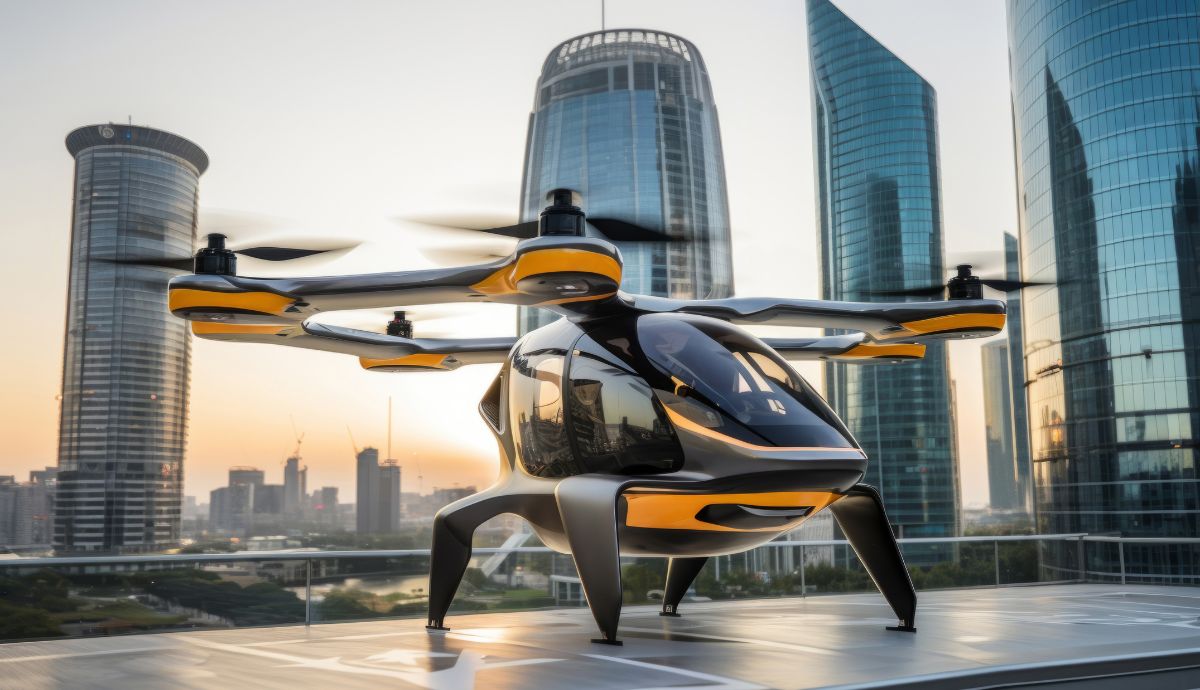
EHang shares have emerged as a focal point for international investors who are looking into investments in future autonomous flying and UAM (Urban Air Mobility) during the electric aviation era. Ehang placed itself in a unique position as one of the earliest eVTOL (electric Vehicle Takeoff and Landing) aircraft commercializers that is ready to take off in a dynamic new industry.
Even as many aviation start-ups are years from regulatory approval or real-world operations, EHang has already completed commercial flights, government-backed pilot programs and regulatory milestones — especially in China. This mix of technology leadership and early commercial traction has left EHang stock in a high-profile position — also one that’s seen its share of volatility.
This reading explains EHang’s business model, regulatory updates, growth opportunities, risks and long-term investment thesis.
What Is EHang?
EHang Holdings Ltd is a [Chinese] technology company that focuses on AAVs. EHang, established in 2014, develops commercially viable autonomous electric aircraft for various passenger transport, logistics, medical emergency response and short-hop commuting.
Unlike the majority of its eVTOL competitors, EHang is focusing on full autonomy rather than piloted vehicles and considers itself a leader in next-gen air mobility.
EHang is listed on Nasdaq; therefore, international investors can buy EHang stock to play the UAM trend.
Understanding EHang’s Autonomous Aircraft Technology
Its flagship product is the EH216 series, a two-seat autonomous and fully electric passenger aircraft for short-haul urban travel.
Key Features of EHang Aircraft:
Fully pilotless autonomous operation
Vertical takeoff and landing capability
Redundant actuators and flight controls
Centralized command-and-control platform
Zero direct emissions
Performance Overview:
Range: Approximately 20–25 miles
Cruising speed: Around 80–100 mph
Key use-cases: Urban sightseeing, air taxis, emergency services
EHang’s strategy contrasts sharply with that of most U.S. and European eVTOL developers, which typically start piloting before shifting to autonomous operation. It’s EHang’s greatest strength, and its biggest weakness — the force propelling it ahead, but also holding it back.
Why EHang Stock Is Drawing Attention From Around the World
EHang stock attracts notice for several strategic reasons:
First-Mover Advantage
EHang was an early company to demonstrate real-world autonomous passenger flights, which allowed it to amass a great deal of operational data and engage with aviation regulators.
Regulatory Progress in China
The regulatory environment in China has been more open to early-stage urban air mobility testing, enabling EHang to move faster than many Western rivals.
Commercial Deployments
These are some of the EHang aircraft that have been employed in:
Tourism operations
Smart city pilot programs
Emergency response demonstrations
The installations represent early revenue opportunities and are proving the company’s technology.
EHang’s stock performance and market sentiment
EHang stock (Nasdaq: EH) is considered a name with high-growth upside traded by many, but it is also known for agonizing volatility. Stock Market in Focus: The stock of the company is gaining significant attention from various perspectives.
Regulatory announcements
New commercial contracts
Policy developments in China
How the world feels about Chinese tech stocks
Shares of EHang, like those of many young technology companies, have also swung wildly and been both a miracle of hope for autonomous aviation and an embodiment of fears about execution risk.
Business Model: How EHang Makes Money, and its business model explained
EHang is a business that has multiple layers, its hardware and software.
Revenue Streams Include:
Sale of autonomous aerial vehicles
Fleet operation and management services
Command-and-control software solutions
Smart city and government contracts
Instead of being strictly about consumer air taxis, EHang is going after enterprise and municipal customers, so it doesn’t have to rely on consumer adoption in the early days.
EHang vs Other eVTOL and Air Taxi Stocks
EHang Stock Competitors: EHang competitors include companies such as:
Joby Aviation
Archer Aviation
Lilium
Vertical Aerospace
Key Differences:
EHang focuses on autonomy, with most rivals relying on human pilots
EHang has earlier commercial operations
Western regulatory routes are consumed by rivals.
That makes EHang stock attractive to investors looking for earlier potential revenue, but adds the regulatory and geopolitical layer of complexity.
Regulatory Landscape and Certification Progress
Regulation is the single greatest issue that will determine the long-term value of EHang stock.
EHang has made significant strides with Chinese aviation regulators, including certain airworthiness certification milestones for its passenger-grade AAVs. These approvals put EHang among the most regulatory-ready scatterings of others around the globe.
However, international expansion will require:
Meets the standards of FAA and EASA
Global alignment in aviation safety frameworks
Trust in aerial passenger autonomous flight
Regulatory approval beyond China remains the biggest question mark for EHang stock.
Challenges and Risks to EHang Stock
Although EHang has an interesting growth narrative, investors should weigh the risks carefully.
Autonomous Flight Acceptance
Public and regulatory trust in driverless commercial aircraft is still under development, particularly beyond China.
Geopolitical Risk
As a Chinese company on a U.S exchange, EHang stock is subject to:
Regulatory scrutiny
Trade tensions
Delisting concerns affecting Chinese ADRs
Scaling and Profitability
Mass-producing airplanes safely and cost-effectively is a challenge, though.
These risks are what make the stock so risky and speculative.
Global Market Opportunity for EHang
The worldwide market for urban air mobility is estimated to be worth tens of billions of dollars in the next few decades. Autonomous aerial transportation is being investigated in high-density cities in Asia, the Middle East and Europe.
EHang’s early experience in operations will allow the company to take advantage of opportunities in:
Tourism-driven urban flights
Government-backed smart city initiatives
Emergency and logistics services
Should unmanned flight be embraced more broadly by regulations, EHang may become a global platform for aerial mobility.
Long-Term Outlook for EHang Stock
EHang stock is a play on the long-term for autonomous aviation, and not a play on near-term financial results. It is the company’s success that relies upon:
Expand regulatory approvals
Scale manufacturing responsibly
Establish public confidence in self-flying
Navigate geopolitical and market risks
For investors willing to take on a large amount of risk and who have a long enough time line, EHang stock gives them exposure to one of the most potential disruptive transportation technologies being developed today.
Should Investors Consider EHang Stock?
EHang stock is not your classical value or income play. Rather, it’s a pitch for an investment in early-stage, category-defining technology where the upside potential is severely asymmetrical.
Like all new technology stocks, diversification and cautious risk management are key when deciding to expose yourself to EHang stock.
About the Author