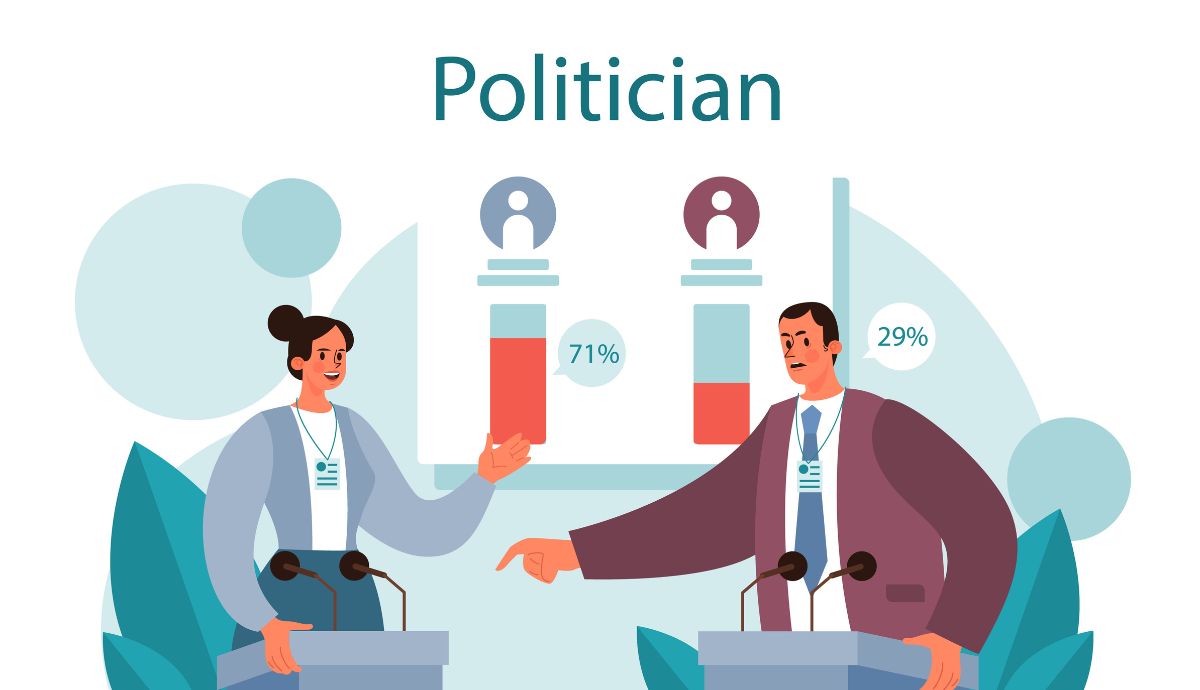
In today’s century, the world is rapidly changing, and the process of political analysis is vital in figuring out the functions of the government, the formation of polices, and relations with other states.
It doesn’t matter whether you are a learner, a writer, a planner, or an active individual; the political analysis of a country empowers you to understand the intricacies of politics and how it affects the world.
The scope of this article is to explain in what ways and how political analysis is being define, what its tools are, how relevant it is to other disciplines, and how they interact with each other to shape, influence, and guide the world.
What is Political Analysis?
Political analysis is the division of a political system, its leaders, its institutions, and its policies that is rational and methodical. It conceptualizes the relations of various political entities: governments,
political parties, and other international relations, and their impacts on the country’s governance and public policies.
In simple words, political analysis encompasses the review of political activities. It is an assessment of the policies with the help of available conservative, rational, and contemporary materials, as well as the predictions of the future. It is the fusion of the political theory with the monetary aspects,
a branch of sociology, and the interpretation of statistics in order to have a clear comprehension of the political dynamics in existence.
The Significance of Political Analysis in Contemporary Society
Political analysis is essential for determining the geopolitical as well as domestic outcomes of any given country. Its ramifications extend outside the world of academia — it touches on most elections, diplomacy, policymaking, and even the court of public opinion. This is the reason why political analysis is value on a global scale.
Evidence-based Decision Making:
Political analysis is one of the most effective tools a government or an institution can use in trying to predict the aftermath of a given policy, the public’s perception, and policy outcomes as a result of the decision made.
Diplomatic and Global Order:
Accumulat political data is peruse for the purposes of understanding inter-state relations and acquiring the ability to avert hostilities, strengthen ties and enhance relations, as well as boost tools for diplomacy.
Political Reporting as a Branch of Mass Communication:
Political analysts assist journalists and reporters in understanding political trends and making predictions, which enables the publishing of well-rounded and accurate analyses and opinions.
Economic Relations:
Political forecasting is a crucial part of any investment, business, and economic activities because it is derive from determining the political status of any given country and determining the correlation it has to the market,
trade relations, and a country’s position in the global supply chain.
Parts of Political Analysis
There are several interlinked parts to a political analysis, which are as follows:
1. Political Systems
The ability to classify and differentiate governments from democracies to dictatorial regimes is critical for political stability and determining policy outcomes for analysts.
2. Institutions and Leadership
In the study of governance, political institutions as parliaments, courts, and political parties are paramount. Their governance, as well as institutions’ influence, has to be mastered in order to explain the substance of political relations and the equilibrium of forces.
3. Public Policy and Legislation
Political critique determines the mechanisms and the impacts of the actions taken by various stakeholders within the society. It attempts to determine whether the policy is for the public good or is serving partisan interests.
4. International Relations
Issues like the environment, global trade, and security pose in-depth questions analyzing the collaboration and conflict among the states.
5. Political Ideologies and Behavior
Every ideology, whether liberal or conservative, has an influence on the discourse and the policies that are formulated. Political analysts try to estimate how people would vote and the ideas that are prevalent, in order to make predictions about the polls.
Types of Political Analysis
Political analysis is not for everybody and does not have to be uniform. It has different branches, depending on the objective.
Descriptive Analysis:
This is a snapshot analysis that lacks value judgment; it states the main events of the politics and systems.
Comparative Analysis:
This evaluates the similarities and the differences of the systems of states or of the entire political order to try and find the best and also the worst of them.
Quantitative Analysis:
Political trends, public opinions, and policies are dealt with in this, including the use of calculations, statistical data, and other information-gathering techniques.
Qualitative Analysis:
This is the study of principles, values, and political systems by way of discussion, documentation, and selective recollections of the past.
Predictive Analysis:
This merges the past information with the trends that are noticeable at present, to create probable expectations of where the politics are headed. This is very crucial in terms of campaigning for elections or for foreign politics.
Tools and Methods Used in Political Analysis
Political analysts employ a variety of instruments in interpreting and forecasting trends. Some of the major tools are:
Data Analytics and Predictive Artificial Intelligence Software:
Predictive Sentiment Analysis software gauges public sentiment through the automated analysis of polling data, election outcomes, and social media discourse.
Content Analysis:
Analyzing political discourse along with speeches, media coverage, and policy descriptions assists in uncovering political objectives and dominants.
Scenario Planning:
Analysts’ tailored models capture projections of potential outcomes in the political arena in order to allow governments and organizations to streamline their contingencies.
SWOT and PESTLE Analysis:
These tools evaluate the political, economic, social, and environmental determinants of policy decisions.
Historical Case Studies:
Analyzing the past movements of decisions of history assists with forecasting the outcome of like events in the future.
The Role of Political Analysts
Political analysts serve the role of the interface between the power and the masses. They analyze intricate and often convoluted strategies, disentangle political communication, and synthesize insights in a manner that augments the public discourse.
Fragmented versions of their efforts typically constitute portions of reports prepared by the state, think-tank institutions, scholarly articles, and journalistic pieces.
Political analysts today are required to possess data-driven analysis and in-depth levels of reasoning. Beyond that, the digital transformation epoch requires the political analyst to engage in the automated analysis of politically oriented activity on the web, and the verification and evaluation of the cascading digital campaign’s disinformation.
Political Analysis in the Current Age of Social Media
Nowadays, political communications have significantly changed due to the evolution of technology and social media. Social media has allowed X (previously Twitter), Facebook, and TikTok to become the weapons of public opinion and tools of political campaign mobilization.
Political analysts today need to understand the digital age and how it has brought about phenomena such as political, social, and economic digitalization.
Disinformation campaigns that go viral
Automated echo chambers
Hashtag social movements and digital activism
Social media’s instantaneous reactions to policies
Political analysts are now able to study emotional political behaviors through digital trends and are able to predict political sentiment and changes in opinion in quicker ways than standard polling.
Global Political Analysis: the issue of Politics and Beyond Borders
No country in the world operates politically in isolation. Global political analysis examines the following aspects:
Global Conflict: The rivalries of the U.S, China, and Russia and their impact on world politics.
Climate Change: The impact of international environmental policy changes on world relations.
Political Economics: The effect of international relations on trade and economic policies.
Global Institutions: The functions of the United Nations, NATO, and the European Union in international security.
These factors contribute to the anticipation of the stability of the region in question and the world, the cooperation, and the trends of governing in the future.
The future of political analysis
The world’s analysis of political events is bound to change in the upcoming Artificial Intelligence: the rest of the world in the next period of time will work alongside on behalf of social political risks movement.
and emerging predictive governance governments will tend to editions on the precautionary policies, analytics, and the risk issues beforehand. Predictive analytics. Ethically, the social consequences must be proportional to the social, political, predictive analysis, social bias, and misinformation. Civically responsible in a geopolitically flexible manner with technological alterations.
The future will bring these changes in the next decade. The fusion of technological ethics in the geopolitics of the world will bring to the analysts the greatest necessity of awareness and flexibility to work on social and political issues of the world.
Why political analysis matters more than ever, younger generations fail to see the nuances of politics around them. Political analysis is more needed than ever in the time of increasing geo and misinformation, as it serves as a guiding light. In addition, it provides citizens with more power to act. Without proper instruction, they are bound to become passive rather than active citizens of a democratic nation.
The time is now for the world of political analysis to change as the globe is drawing closer to world politics. Political analysis, the way that it has been studied till now, is not enough, as it is a necessity for logical precautions for political stability and rational decisions.
About the Author